
Educators
How to Become a Supply Teacher in the UK: A Step-by-Step Guide
TL;DR
- You don't always need QTS to work in supply. There are roles for TAs, cover supervisors, and early years staff too
- The core requirements are an enhanced DBS check, references, and proof of qualifications
- Registration with a platform or partner is straightforward and can be completed entirely online
- Your first supply booking can come within days of completing registration
- Humly handles the entire process through the app. No paperwork, no waiting rooms
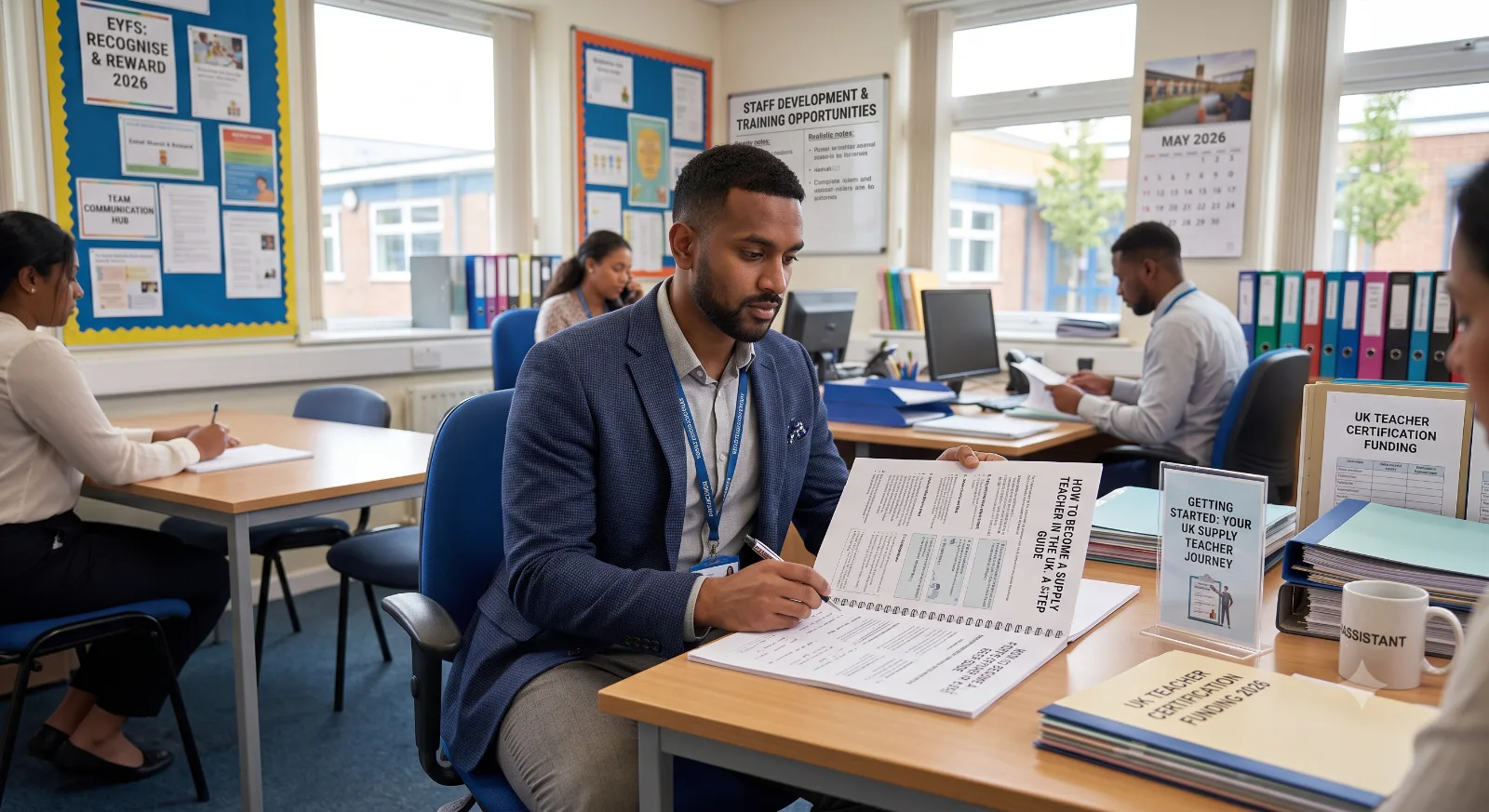
Do you need QTS to do supply work?
This is the first question most people ask. And the answer is no, not for every role.
Qualified Teacher Status (QTS) is required if you're covering a class independently as the lead teacher. But supply work spans a much wider range of roles than that. Teaching assistants, higher level teaching assistants, cover supervisors, nursery nurses, SEN support workers, and early years practitioners all work in supply. And none of those roles require QTS.
So the starting point isn't "do I have QTS". It's "what role am I qualified and suited for?"
3
steps. DBS, references, qualifications. To complete registration
48hrs
typical time from completed registration to first booking on Humly
8
roles available in supply beyond qualified teacher
Roles available without QTS
- Cover supervisor. Supervises work set by a teacher, doesn't lead lessons independently
- Teaching assistant (Level 2 or 3). Supports learning in the classroom alongside a teacher
- Higher Level Teaching Assistant (HLTA). Can lead classes under teacher direction
- Nursery assistant. Supports early years learning in a nursery setting
- Nursery nurse (Level 3). Leads activities and supports child development in EYFS
- Learning support assistant. Works with individual pupils or small groups, often in SEN settings
- SEN support worker. Specialist support for pupils with additional needs
- Early years teacher (EYT/EYTS). Leads in early years settings, separate qualification to QTS
Roles that require QTS
- Supply teacher covering a class independently
- Long-term supply covering a teacher's planned absence
- Permanent placement via supply (most schools require QTS for permanent teaching contracts)
Step 1. Check your qualifications
Before registering, make sure you have the relevant documentation to hand. What you need depends on the role you're applying for.
For QTS teachers
- Degree certificate
- QTS certificate or evidence of qualified teacher status (check the DfE's Teacher Services portal if you need a copy)
- Evidence of previous teaching experience. P60s, payslips, or a reference from a previous employer
- Any relevant postgraduate qualification (PGCE, School Direct, Teach First, etc.)
For non-QTS roles
- Relevant vocational qualification. Level 2 or 3 in Education and Childcare, CACHE, BTEC, or equivalent
- Any previous work experience with children, in school or early years settings
- References from previous employers in education or childcare
For overseas-trained teachers
If you trained outside the UK, you may need to apply for QTS recognition through the DfE's international qualified teacher status route. This process has been streamlined in recent years for teachers from certain countries. Humly can advise on your specific situation during registration.
Step 2. Get your DBS check
An enhanced DBS (Disclosure and Barring Service) check is mandatory for anyone working with children in the UK. There are no exceptions.
If you don't already have one, your platform or partner will typically arrange this as part of the registration process. Humly handles DBS applications directly. You won't need to sort this independently.
A few things worth knowing:
- Enhanced DBS checks for working with children include a check of the children's barred list
- Processing times vary but are typically 2–4 weeks for a new application
- If you already have a recent DBS check from a previous education role, it may be accepted. Particularly if you're registered on the DBS Update Service, which allows employers to check your certificate in real time without a new application
- DBS checks are role and employer specific. A check obtained for one provider may not automatically transfer to another, though Update Service registration helps
The DBS Update Service
If you plan to work in education long term, registering for the DBS Update Service (£16 per year) is worth doing. It allows any employer to check your certificate is still current without you needing to apply for a new one every time you change provider. Register within 30 days of your DBS certificate being issued.
Step 3. Gather your references
Most platforms and partners require two professional references. Ideally from educational settings you've worked in within the last two years. These are used to verify your suitability to work with children and confirm your professional conduct.
If you're newly qualified and don't have two years of experience, references from your teacher training placement schools are typically accepted. If you're returning to education after a career break, references from your most recent educational employer plus a character reference may be required.
References are checked before you can accept any bookings. It's worth giving your referees a heads-up that they may receive a request, as delays at this stage are one of the most common reasons registration takes longer than expected.
Step 4. Register with a platform or partner
Once your documentation is in order, the registration process itself is straightforward. With Humly, everything is done through the app:
- Download the Humly app and create your profile
- Upload your qualifications, DBS certificate (or apply for one through the app), and references
- Complete a short eligibility check. Humly's team reviews your application, typically within 24–48 hours
- Set your availability. Choose which days you're open to work, which roles you want, and which areas you're willing to travel to
- Start receiving job matches. Once approved, relevant bookings are pushed to you in real time
There's no in-person interview, no office visit, and no paper forms. The entire process is designed to get you working as quickly as possible.
“I registered on a Tuesday evening, had my profile approved by Thursday, and accepted my first booking that same day. I genuinely didn't expect it to be that quick.”
What to expect on your first supply day
Your first supply booking can feel daunting. You're walking into an unfamiliar school, often with very little notice. Here's what typically happens and how to prepare.
Before you arrive
- Confirm the booking details the evening before or first thing in the morning. School name, address, start time, and the name of the person to report to
- Check travel time carefully, especially for early starts
- Bring photo ID, your DBS certificate (schools may ask to see it), and any relevant qualification documents on your first visit to a school
On arrival
- Sign in at reception. All visitors to schools are required to sign in and wear a visitor badge
- Ask to be shown to the staffroom and introduced to the relevant year group or department lead
- Request a copy of the school's daily timetable, behaviour policy, and any lesson plans or resources left by the absent teacher
- Ask where the nearest pastoral support is. Knowing who to call if there's a behavioural issue before it escalates is important
During the day
- Stick to the lesson plans and work set where they exist. Schools appreciate supply staff who follow their systems rather than going off-script
- Take a register for every lesson and report attendance accurately
- Note anything significant. Incidents, pupil concerns, work completed. To hand over to the class teacher or relevant staff member at the end of the day
After the day
- Complete your timesheet through the Humly app before you leave or immediately after. This ensures you're paid accurately and promptly
- Leave a brief written note for the returning teacher summarising what was covered and anything they need to know
Building a consistent supply career
Getting your first booking is the start, not the finish. Supply teaching rewards consistency and relationship-building. Schools that know you will request you by name. And that means more bookings, better schools, and more control over your working life.
A few habits that make a difference early on:
- Say yes when you can, especially at the start. Building a reputation with two or three local schools gives you a reliable foundation.
- Be easy to work with. Schools remember supply staff who arrive on time, follow their systems, and leave helpful notes.
- Keep your availability up to date on the app. Schools can only match you to bookings if they know you're free.
- Ask for feedback. Most schools are happy to let you know how a day went. Use that to improve and to demonstrate you take your work seriously.
Ready to get started?
Register with Humly in minutes. Upload your documents, set your availability, and start receiving bookings.
Register as an educatorFAQs
Related Articles

Teaching Tips
5 Tips for Successful Substitute Teaching

School Management
How Schools Can Reduce Staffing Stress
Industry Insights