
Career Advice
Nursery Nurse Qualifications: Your 2024 UK Guide
TL;DR: To become a nursery nurse in the UK, the standard qualification is a Level 3 diploma recognised for the Early Years Educator (EYE) framework. While you can start as an assistant with a Level 2, Level 3 is essential for practitioner roles. You will also need an enhanced DBS check and paediatric first aid training.
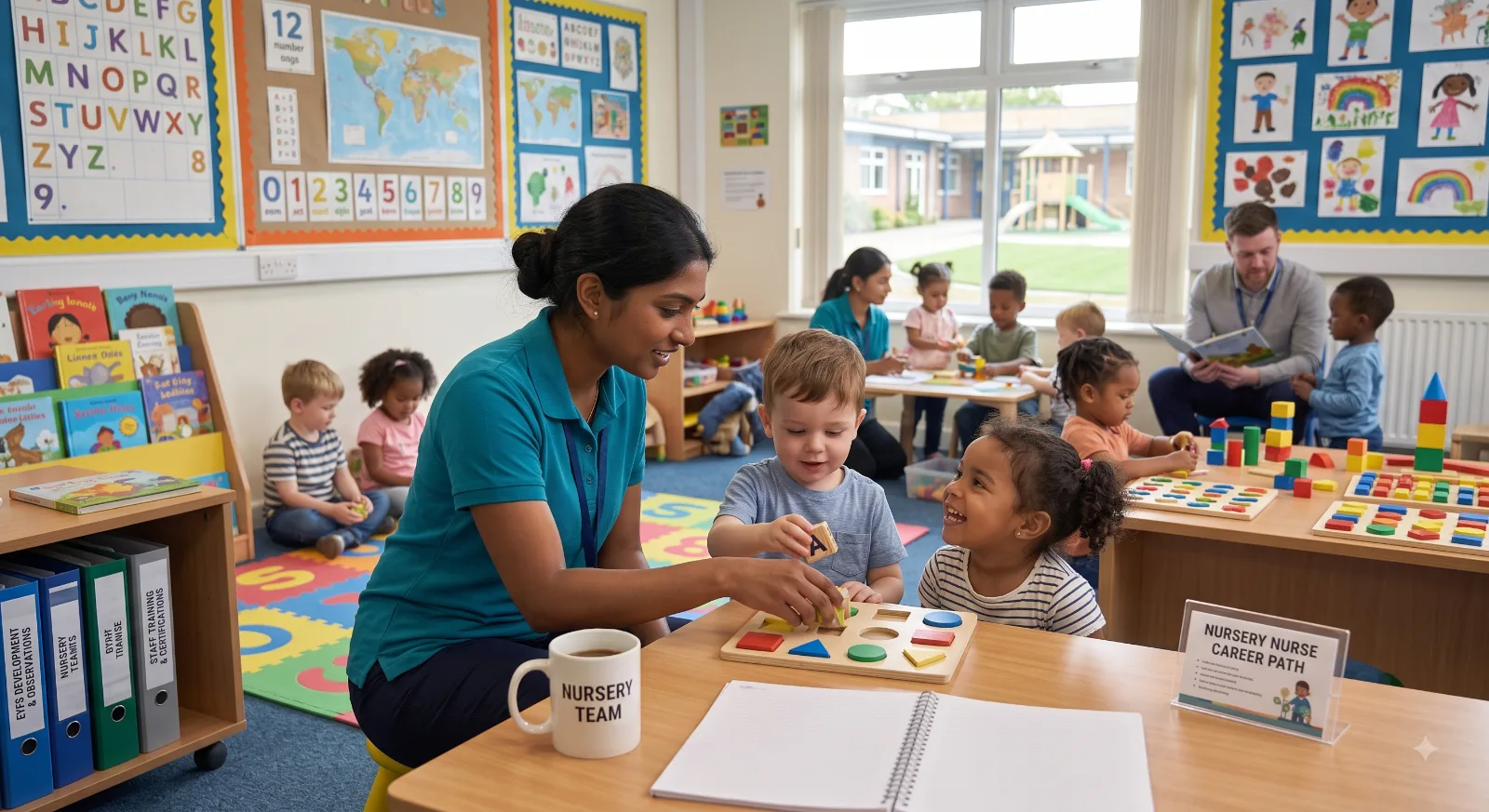
Working in early years is one of the most rewarding roles in education. You are there for the first steps, the first words, and the first sparks of curiosity that set a child on their learning journey. But to provide that crucial support, you need the right skills and knowledge. If you're wondering what nursery nurse qualifications you need to get started, you're in the right place.
It can feel like a confusing landscape of acronyms and levels, but it’s more straightforward than it looks. Let's break down exactly what schools and nurseries are looking for.
The Core Qualifications: Level 2 and Level 3
The qualifications framework for early years is tiered. While there are entry points at Level 2, the goal for any aspiring nursery nurse is to achieve a "full and relevant" Level 3 qualification. This is the industry standard.
Level 2 Qualifications: These are your starting point. A Level 2 certificate or diploma (such as the NCFE CACHE Level 2 Diploma for the Early Years Practitioner) qualifies you to work as a nursery assistant. In this role, you'll support qualified staff, interact with children, and help with daily routines. It's a fantastic way to gain experience while you work towards the next level.
Level 3 Qualifications: This is the key that unlocks the role of a nursery nurse or early years educator. A Level 3 qualification demonstrates that you have the in-depth knowledge to plan activities, monitor development, and take on key worker responsibilities. The most common and respected qualification is the Level 3 Diploma for the Early Years Educator (EYE).
Holding a Level 3 qualification is not just a preference; it's a sector-wide expectation. In fact, government data shows that 83% of all paid early years staff hold a relevant qualification at Level 3 or above. This makes it the essential benchmark for a long-term career.
Pathways to Gaining Your Nursery Nurse Qualifications
There isn't just one way to get qualified. Depending on your circumstances, you can choose the route that works best for you.
College Courses: The most traditional route is studying full-time or part-time at a further education college. These courses combine classroom learning with practical placements in early years settings, giving you a brilliant mix of theory and hands-on experience.
Apprenticeships: An early years apprenticeship is an increasingly popular choice. You work in a nursery or pre-school while studying for your qualification, meaning you earn a wage as you learn. It’s an ideal option if you prefer a more practical, work-based approach.
T Levels: A newer option for 16-19 year olds is the T Level in Education and Childcare. This is a two-year course that is equivalent to three A Levels and includes a significant industry placement, preparing you directly for work or further study.
The early years sector is actively seeking skilled individuals. With 60% of providers reporting recruitment difficulties in 2023, gaining a Level 3 qualification puts you in a strong position to build a stable and fulfilling career.
Essential Checks and Skills Beyond Diplomas
Formal qualifications are the foundation, but nurseries also have a duty of care that requires other essential checks and skills.
Mandatory Safeguarding Checks:
Before you can work with children, you must have a clear Disclosure and Barring Service (DBS) check. This will be an 'enhanced with barred list' check, which looks for any reason why you might be unsuitable to work with children. Your employer or agency will arrange this for you.
Paediatric First Aid (PFA):
Having staff trained in first aid is a legal requirement for nurseries. Many settings will require at least one person with a current PFA certificate to be on-site at all times. While some employers provide this training, having it already makes your CV stand out.
Key Personal Skills:
Beyond the paperwork, being a great nursery nurse requires a specific set of personal attributes. These are the skills you build through experience:
Patience and empathy
Creativity and imagination
Excellent communication skills (for children, parents, and colleagues)
Teamwork and collaboration
A genuine passion for child development
What If My Qualifications Aren't From the UK?
If you gained your teaching or childcare qualifications outside the UK, you'll need to have them officially recognised. You can apply to the UK's National Information Centre for qualifications (UK ENIC) for a Statement of Comparability.
This statement will confirm the level of your overseas qualification in the UK framework. However, for it to be considered 'full and relevant' for an early years role, the DfE will also need to review the course content to ensure it meets the EYE criteria. It's a multi-step process, but it's the correct path to getting your experience formally recognised.
Can You Start Without Any Qualifications?
Yes. You don't need any qualifications to get your first role. Nurseries regularly hire unqualified nursery assistants, where you'll support qualified staff with daily routines, play-based learning, and mealtimes, no certificate needed. Helpscoutdocs
The catch: because your qualification level affects staff-to-child ratios, unqualified staff count differently than Level 2 or 3 practitioners. So most nurseries only take on a limited number, and expect you to work towards Level 2 or 3 once you're in post. Many will fund that training for you. Helpscoutdocs
Two things still apply even here:
DBS check. Mandatory regardless of qualification level.
Paediatric First Aid. Not required for unqualified roles, but a plus on your CV. Helpscoutdocs
It's a legitimate, low-barrier way in if you're not ready to commit to a full course yet.
Ready to take the next step?
With your qualifications sorted, it's time to find a role that values your expertise. See the latest nursery positions available through Humly.
Browse nursery jobsWorking in early years is a chance to make a real difference every single day. Understanding the required nursery nurse qualifications is the first step towards joining a workforce of over 339,500 dedicated early years professionals in England.
Whether you're just starting your journey with a Level 2 or are an experienced Level 3 practitioner, there are settings that need your skills. At Humly, we partner with nurseries and schools to connect them with passionate educators like you. We believe in making the process simple and supportive, so you can focus on what you do best: nurturing the next generation.
FAQs
Related Articles

Career Advice
Career Growth in Education

Teaching Tips
5 Tips for Successful Substitute Teaching

School Management