
Schools & Nurseries
Teacher Absence Management: How Schools Can Reduce Disruption
TL;DR
- Teacher absence costs UK schools an estimated £1.2 billion per year in supply cover and lost learning time
- Most schools don't track absence patterns closely enough to manage them proactively
- Short-term absence. Illness, personal emergencies. Accounts for the majority of supply spend
- Staff wellbeing, workload management, and early intervention significantly reduce avoidable absence
- A reliable, fast cover system means that when absence does happen, disruption to pupils is minimised
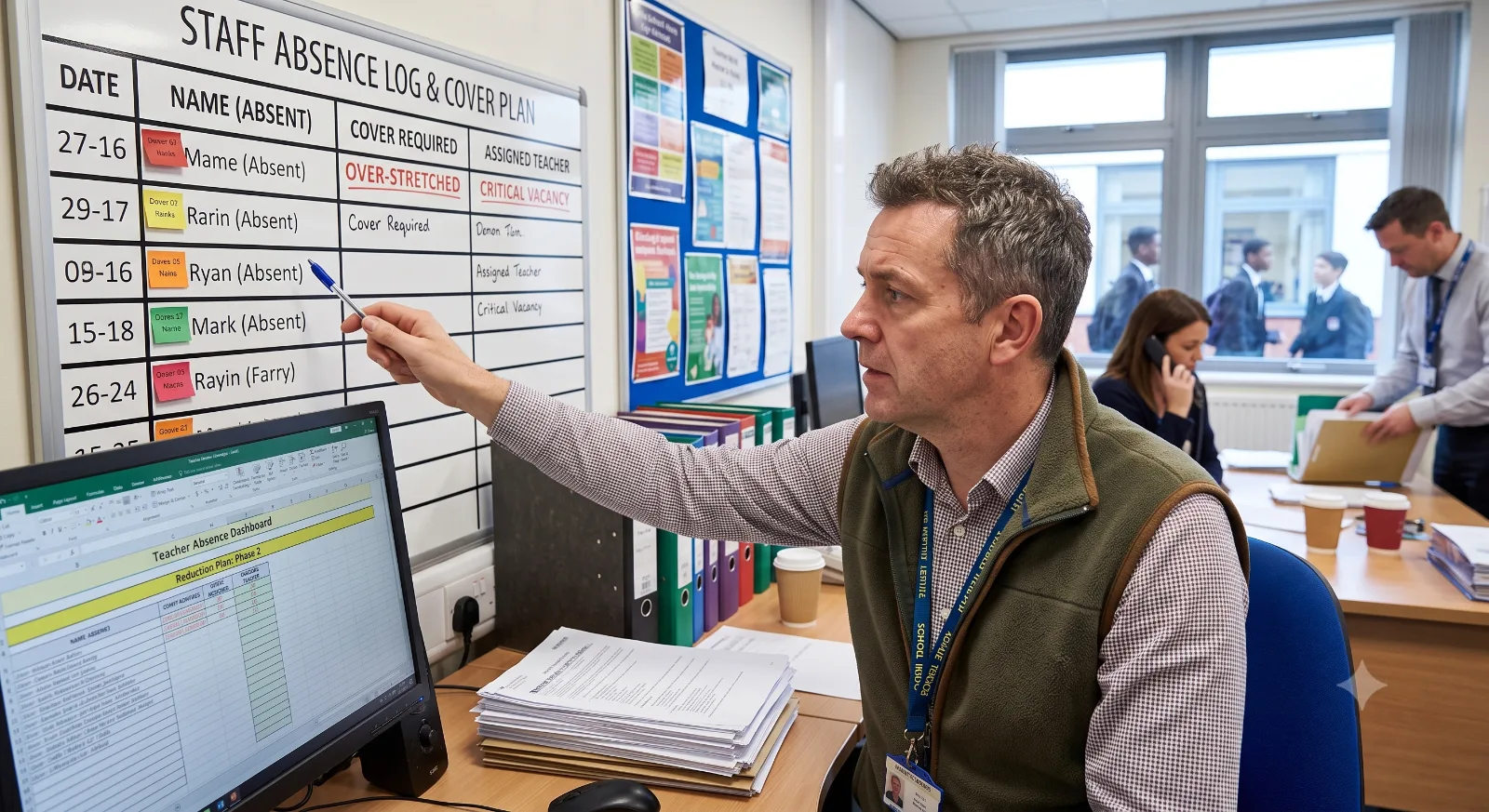
Teacher absence is an unavoidable part of running a school. Teachers get ill, have family emergencies, attend training, go on planned leave. No school eliminates absence entirely. And nor should that be the goal.
The goal is managing it well. That means understanding your school's absence patterns, reducing the absences that are avoidable, having a cover system that responds quickly and reliably when absence does happen, and making sure the financial and operational cost of absence is as low as it reasonably can be.
Most schools are reactive on absence. The best schools are strategic. This guide covers what that looks like in practice.
£1.2bn
estimated annual cost of teacher absence to UK schools
5.6 days
average number of days a teacher in England is absent per year
60%
proportion of supply bookings that are same-day emergency cover
Why teacher absence management matters
The direct financial cost of teacher absence is well documented. Supply cover for a single QTS teacher costs a school between £180 and £250 per day through a traditional partner. A school with 60 staff and an average absence rate of 5.6 days per teacher is spending tens of thousands of pounds on cover every year. Often without a clear picture of what's driving it or how to reduce it.
But the financial cost is only part of the picture. Teacher absence disrupts pupil learning. Classes that have had multiple supply teachers in a term show measurable disruption to progress, particularly in primary schools where the class teacher relationship is central to learning. Absence also increases workload for permanent staff. Colleagues covering lessons, pastoral staff managing unsettled pupils, senior leaders firefighting cover arrangements that should be routine.
Managing absence well is not just a budget exercise. It's a school improvement issue.
Understanding your absence data
You cannot manage what you don't measure. The starting point for any effective absence strategy is a clear picture of your school's actual absence patterns.
What to track
At a minimum, schools should be tracking:
Total absence days per term and per academic year
Absence by individual staff member. Not to monitor individuals punitively, but to identify patterns that may indicate underlying issues
Absence by cause. Illness, personal emergency, planned leave, training, other
Absence by term. Most schools see a spike in January and February, a secondary spike in November, and a drop in summer term
Supply spend per absence day. To understand the true cost of each absence event
How to use it
Aggregate data tells you where the problem is biggest. If 20% of your staff account for 60% of your absence days, that's a pattern worth exploring. Not to discipline, but to understand. Are those staff in more demanding roles? Do they have wellbeing concerns that aren't being addressed? Is there something structural about their timetable or workload that's contributing?
Seasonal patterns tell you when to prepare. If January is consistently your highest absence month, having your preferred supply pool confirmed and available before Christmas is a basic mitigation. Being reactive in the highest absence month is an avoidable cost.
Cause data tells you what's addressable. Illness-related absence has different drivers and different responses to planned leave or personal emergencies. Understanding the split helps you target interventions appropriately.
Tools for tracking absence
Most school management information systems (MIS). Including SIMS, Arbor, and Bromcom. Have absence tracking functionality that many schools underuse. If you're not running regular absence reports from your MIS, start there. More sophisticated schools use dedicated HR management tools that integrate with their MIS and provide dashboard-level visibility on absence trends in real time.
Reducing avoidable absence
Not all absence is avoidable. Teachers get ill. But a meaningful proportion of teacher absence is driven by factors that schools can influence. Primarily workload, wellbeing, and workplace culture.
Workload is the primary driver
The DfE's Teacher Workload Survey consistently finds that excessive workload is the leading cause of stress in the teaching profession, and stress is the leading cause of long-term teacher absence. Schools that address workload directly. Reducing unnecessary marking, streamlining data collection, protecting non-contact time. See measurable reductions in stress-related absence over time.
This is not a quick fix. But it is the most impactful lever available to school leaders who want to reduce absence sustainably.
Early intervention on wellbeing concerns
Many long-term absences are preceded by a period of visible difficulty. Increased short-term absence, changes in behaviour, reduced engagement. Schools with strong line management cultures, where pastoral conversations with staff happen regularly rather than only at performance management time, catch these signs early and intervene before a short-term issue becomes a long-term absence.
A brief supportive conversation at week two of repeated short-term absences is far more effective. And cheaper. Than a formal absence management process at week twelve.
Flexible working where possible
Post-pandemic, teacher expectations around flexible working have shifted. Schools that offer genuine flexibility. Flexible start and finish times where the timetable allows, part-time arrangements, hybrid working for non-contact tasks. Find it easier to retain staff and see lower absence rates. Flexibility reduces the pressure on staff to take absence days for appointments, caring responsibilities, and personal commitments that could otherwise be managed without a full day off.
Physical environment and culture
Schools where staff feel supported, respected, and valued have lower absence rates. This is not a soft observation. It's consistently supported by the evidence on workplace absence. Senior leaders who are visible, approachable, and responsive to staff concerns create the conditions for staff to raise issues before they become absence drivers.
Building a cover system that works
Even a school with an excellent staff wellbeing culture will have absence. The question is whether your cover system handles it smoothly or creates additional disruption.
Internal cover first
Most schools have a degree of internal cover capacity. PPA cover teachers, HLTAs, or a floating member of staff whose timetable includes built-in cover time. Using internal capacity for the first absence of the day, before calling on external supply, reduces cost and is faster to deploy.
Map your internal cover capacity clearly at the start of each term. Know who can cover what, for how long, and what the tipping point is at which you need external supply. Having that picture in advance means you're making decisions against a framework rather than improvising under pressure.
A reliable external supply partner
For absences that exceed your internal capacity, you need a supply provider that can respond fast. The critical window is between the absence call and the start of the school day. Typically 6am to 8:30am. A provider that can confirm a booking in that window, for the specific role you need, consistently and reliably, is worth paying for.
Test your provider before you need them urgently. Make a booking at short notice on a quiet day and see how they respond. Their speed and reliability in that test is a reasonable predictor of how they'll perform at 6:15am on a January Monday.
A preferred pool of supply educators
As covered in our guide to finding supply teachers, the most reliable cover system over time is a preferred pool of educators your school knows and trusts. They know your building, your pupils, your systems. They can be confirmed faster because they've already been vetted and inducted. And their presence is less disruptive to pupils than an unknown face.
Building this pool takes time but starts immediately. Every supply educator who has a good day at your school is a potential preferred staff member. Note them, rate them on the platform, and request them specifically next time.
Cover supervisor capacity
For lessons where independent cover is manageable. Where work has been set and supervision is the primary need. A cover supervisor is a more cost-effective option than a supply teacher. A cover supervisor costs £110–£150 per day through a partner versus £180–£250 for a QTS teacher. For a secondary school managing several simultaneous absences in a day, the cost difference across a term is significant.
Make sure your supply provider can supply cover supervisors as well as teachers, and have a clear policy for which type of cover is appropriate for which situations.
Long-term and planned absence. A different challenge
Planned long-term absences. Maternity leave, sabbaticals, secondments, long-term illness. Require a different approach to emergency day cover.
Plan early
As soon as a long-term absence is confirmed, begin the cover planning process. The earlier you start, the more choice you have. A long-term supply placement sourced six weeks in advance gives you the time to find the right educator for the role, brief them properly, and arrange a handover with the departing teacher. A placement sourced the week before is a compromise.
Use long-term supply before advertising permanently
For vacancies that arise unexpectedly. A teacher leaves mid-year, a recruitment round fails. Long-term supply is often the most practical bridge while you recruit permanently. It's faster than a full recruitment exercise, and it gives you the option of offering the role to the supply educator if they perform well.
Brief long-term supply staff properly
A long-term supply educator who knows the school's curriculum expectations, behaviour framework, assessment system, and key pupils is significantly more effective than one who doesn't. A half-day induction at the start of a long-term placement pays dividends in pupil outcomes and reduced pastoral workload throughout.
FAQs
Related Articles

Teaching Tips
5 Tips for Successful Substitute Teaching

School Management
How Schools Can Reduce Staffing Stress
Industry Insights